
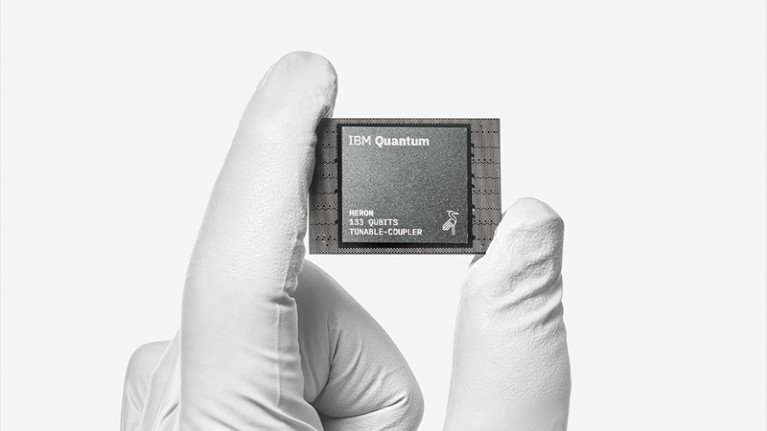
The race to build scalable quantum computers is often measured in qubit counts. But buried beneath the excitement over rising numbers lies a stubborn engineering reality. Most of those qubits aren’t usable. They exist to prop up a handful of logical qubits, compensating for instability, environmental noise, and operational error. One panelist at SPIE, Erik Hosler, known for his work on scalability and qubit usability, highlighted the scope of the problem that quantum computing’s current architectures require hundreds or even thousands of physical qubits just to make one functionally reliable.
It is not a minor efficiency issue. It’s a structural barrier to building practical quantum systems. The 1000:1 ratio between physical and usable qubits distorts roadmaps, inflates design demands, and pushes even basic applications further into the future. Understanding why that ratio exists and what it will take to shrink it is central to the future of the entire field.
The Scaling Illusion
Qubit counts dominate headlines. When a company announces a 433-qubit processor or a plan for a 1000-qubit milestone, it naturally captures attention. But without context, these numbers can mislead. In current architectures, most qubits serve one purpose: to protect a few key qubits from error.
That is because quantum information is incredibly fragile. Qubits decohere easily, respond inconsistently to control signals, and accumulate errors with each operation. To make a single “logical” qubit, one that can run a useful algorithm, a massive number of physical qubits are needed for redundancy and correction. Some estimates place the average at around 1,000 to 1.
It means a 1,000-qubit machine might contain only one logical qubit. It may not be able to run any real workload beyond basic demonstrations. Without significant advances, scaling such systems into useful territory becomes prohibitively complex. Cryogenic systems, power distribution, and readout mechanisms all scale with the number of physical qubits, not with the number of usable ones. The illusion of scale becomes a trap. We build larger machines without gaining more computational power.
A Ratio That Redefines Architecture
The weight of this trade-off was made explicit during the SPIE Advanced Lithography symposium.
“Noise in current qubits means that many physical qubits are needed to make up a single usable one. The ratio today is about 1000:1, but that number varies according to the noise level of the physical qubits,” Erik Hosler explains.
It articulates a core limitation. Noise is not just a technical nuisance. It redefines the entire system architecture. Every control line, cryogenic amplifier, and routing path must be designed around qubits that don’t directly contribute to computation.
In practice, this means that machines with a small number of logical qubits are often large, expensive, and complex. They require extreme cooling environments, precise timing electronics, and increasingly elaborate calibration processes.
Different quantum platforms experience different ratios. Superconducting qubits, trapped ions, and silicon-based spins each have unique noise profiles. But all share the burden of overhead. Without a path to reduce it, practical systems will remain out of reach for most commercial and scientific applications.
It reframes how we think about quantum hardware design. It is not just about adding more qubits. It is about doing more with fewer, and designing systems that are built from the outset to minimize the conversion penalty between physical and logical units.
Quantum Engineering Under Constraint
Addressing the 1000:1 challenge isn’t just about smarter algorithms. It requires rethinking engineering from the ground up. That starts with materials. Many noise sources in qubits originate from their physical makeup, impurities in superconducting films, irregularities in substrates, or instabilities at the interface between materials. The SPIE panel highlighted how the same stochastic defects and variability that affect classical patterning now present critical risks for quantum systems.
Improving the reliability of individual qubits means refining fabrication at every step. Resist chemistry, line edge roughness, and multilayer alignment topics once confined to classical semiconductor manufacturing are now essential in reducing quantum noise.
Metrology also plays a key role. Finding sources of decoherence in a complex 3D stack operating near absolute zero is not a trivial task. But it’s necessary if the industry is to deliver the kind of low-noise environments required to push the 1000:1 ratio downward. Every engineering decision, from material selection to wiring layout, affects the number of physical qubits needed to support a logical one. Precision isn’t just ideal, but mandatory.
Beyond Thresholds: Toward Practical Ratios
In theory, all quantum computers are noisy. But only some can tolerate it. That’s where error correction thresholds come into play. Below a certain error rate, adding more qubits can protect against faults. Above that threshold, errors accumulate faster than they can be corrected.
That is why progress is now measured in improvements to fidelity, not just size. A 100-qubit system with extremely low error rates may be more powerful than a 1000-qubit system plagued by noise. And the most promising research today isn’t focused on building bigger machines. It’s focused on reducing the number of physical qubits needed per logical one.
Some groups aim to shrink the ratio from 1000:1 to 100:1. Others hope for 10:1 or even parity, where a physical qubit is close to usable on its own. Those ratios would make large-scale systems feasible, reducing cryo requirements, lowering power needs, and dramatically increasing usable compute density.
Getting there will take more than materials and architecture. It will require fault-tolerant algorithms that reduce the burden on hardware. It will demand new control schemes, new layout strategies, and likely, new qubit types.
But if the ratio can fall even by a factor of ten, the implications would be immediate. Smaller systems could do more. Commercial use cases could shift from theoretical to practical. The entire timeline for quantum maturity would accelerate.
Solving the Ratio, Unlocking the Machine
The 1000:1 problem may not make for flashy headlines, but it defines the pace of quantum development. It affects system size, cost, power, complexity, and reliability. It is also the difference between prototypes and platforms.
Solving this problem doesn’t just mean optimizing a number. It means unlocking an entirely new class of systems. Machines that are no longer bound by the weight of their redundancy. Machines that can compute, not just correct.
In the coming years, we may continue to see announcements of rising qubit counts. But real progress will be marked by a different shift, the shrinking ratio between what we build and what we can use. That will be the true breakthrough. That will be the moment quantum becomes more than a promise, but a performance.
